

Court of Appeal rules that the A5 Scheme can proceed
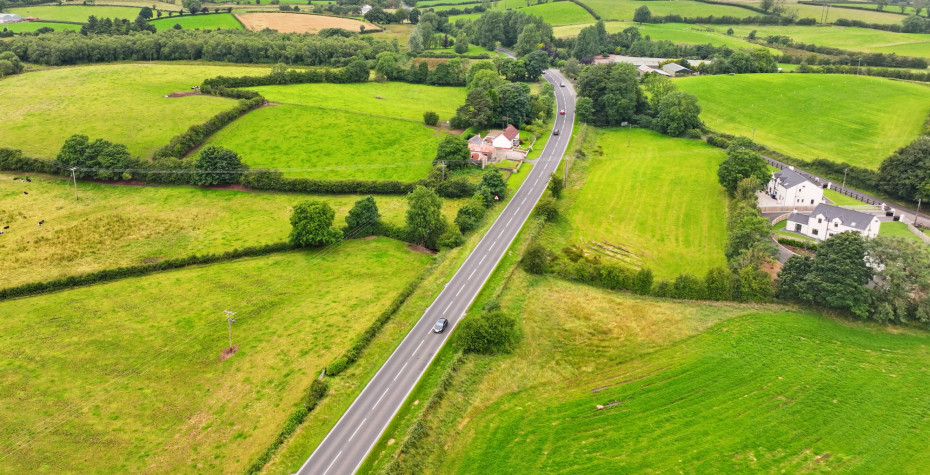
Yesterday the Court of Appeal handed down its judgment in the latest challenge to the A5 road scheme. Importantly, the judgment has overturned the decision of the High Court which quashed the decision to proceed with the scheme and has concluded that the first phase of the A5 can proceed following an appeal by the Department for Infrastructure (“DfI”). The judgment has been patiently awaited and the implications of it for the A5 scheme itself and for other major infrastructure projects are evident from the widespread reporting of the decision.
Whilst the judgment itself has not officially been published, the Judicial Communications Office has issued a summary which provides an overview of the conclusions reached by the Court of Appeal.[1] The summary notes there were four main matters that came before the Court of Appeal which related to the High Court’s conclusions on:
- Compliance with the Environmental Impact Assessment Directive (“EIA Directive”).
- Human Rights issues.
- The duty imposed by Section 52(1) of the Climate Change Act (NI) 2022.
- Evidence relating to climate change.
The first matter related to whether revised emission estimates for the project should have been subject to further public consultation under the EIA Directive – the High Court concluded that the Department for Infrastructure had erred in not subjecting this information to further consultation. The Court of Appeal disagreed and the summary notes it concluded that “the High Court erred in effectively requiring a greater analysis of this distinct issue of GHG emissions arising from induced cross-border journeys and effectively requiring a new ES.” The Court of Appeal was satisfied that the methodology and expert evidence filed on behalf of DfI addressed the question of transboundary emissions.
In relation to the Human Rights issues, the High Court held that the DfI had failed to carry out any proportionality analysis in deciding not to impose a time limit on the commencement of construction of the scheme and this was ultimately a procedural failure. The Court of Appeal once again disagreed and considered that the DfI had “carried out a detailed human rights assessment as part of the scheme preparation, and this matter was part of public consultation.” Furthermore, a revised assessment was carried out prior to the decision issuing.
The High Court’s conclusions on Section 52(1) of the Climate Change Act (NI) 2022 were arguably the ones which caused most concern for developers of major infrastructure projects as the lower court decision left them wondering how that duty could be complied with moving forward.
Section 52(1) requires Departments to, inter alia, exercise their functions in a manner that is consistent with the emissions targets and budgets set by the Climate Change Act (NI) 2022. The summary of the judgment notes that the Court of Appeal was “satisfied that the legal obligations created by the 2022 Act to achieve net zero by 2050 are not a prohibition upon the authorisation for a new road where it has been assessed, as far as possible, to be consistent with emission reduction obligations. Nor does it require that the precise GHG contribution of every project which may be authorised between now and 2050 should be specified upon a precise and quantified pathway prior to authorisation.”
In this instance, the DfI was deemed to have had sufficient information on the scheme to conclude that it would not undermine compliance with the targets set.
Crucially, the summary notes the Court of Appeal has concluded that project level emissions do not have to be accounted for within a Climate Action Plan and “it would place too high a burden upon departments to ensure that individual projects fit within climate action plans specifically”, noting that this would stymie major development projects in Northern Ireland.
[1] Summary of Judgment - In re Hassard and others (A5) (CA) | Judiciary NI
Conclusion
The judgment provides a significant boost for major development projects in Northern Ireland as it provides DfI with much greater flexibility and discretion when considering such projects against the requirements of the Climate Change Act (NI) 2022.
The full judgment will provide additional clarity on the issues and it also remains to be seen as to whether permission will be sought to appeal the judgment to the Supreme Court.
*This information is for guidance purposes only and does not constitute, nor should be regarded, as a substitute for taking legal advice that is tailored to your circumstances.
If you would like any further information or advice on these issues, please contact Faye Phillips or another member of our Planning & Environmental team.
About the author